
AI Literacy
How Kids Can Use AI Safely for School
A practical guide for parents who want children to use AI as a learning assistant, not a shortcut.
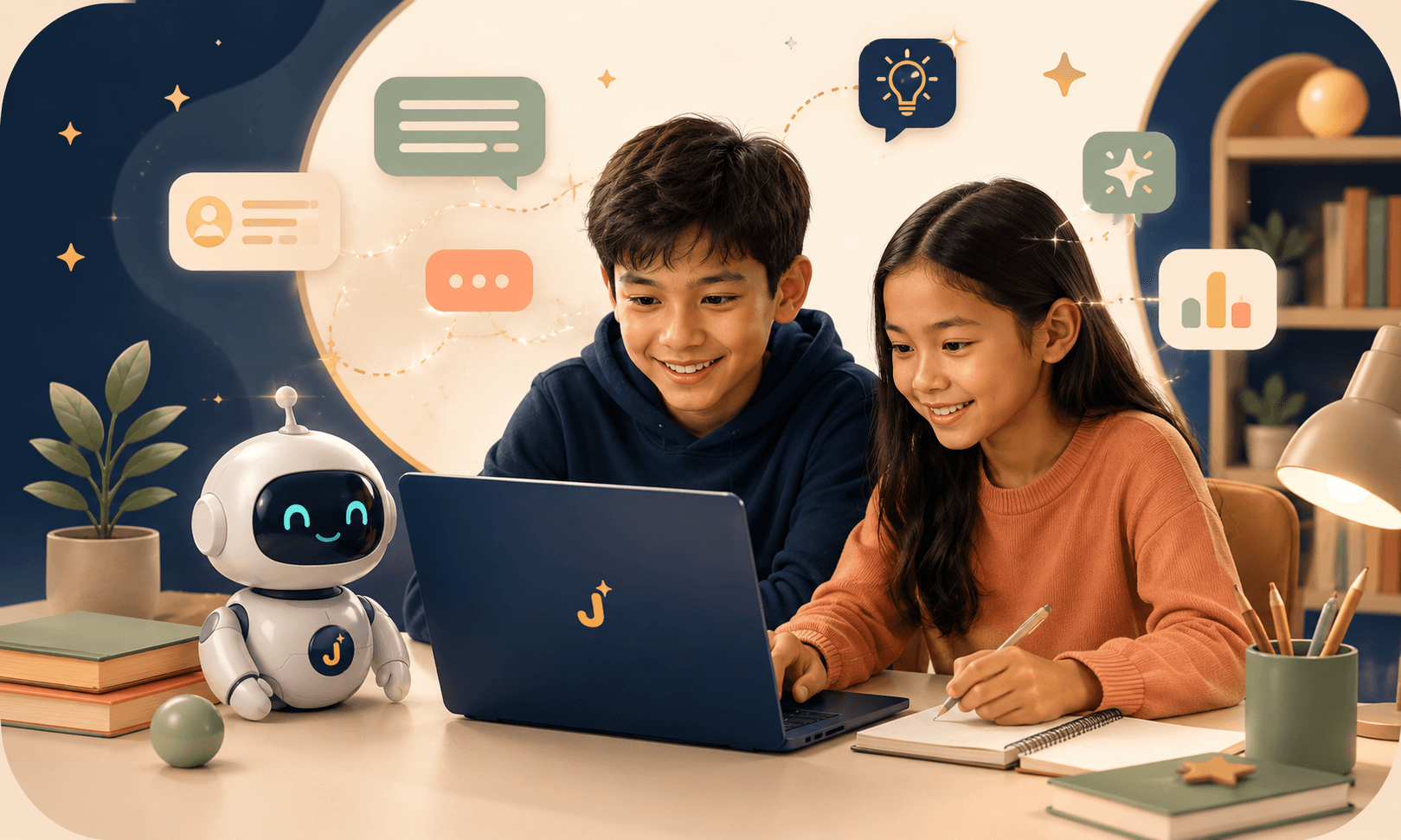
Start with the school rule
Before using AI, students should check whether the assignment allows it. Some teachers welcome AI for brainstorming or practice but not for writing the submitted answer. When the rule is unclear, ask first.
Protect personal information
Prompts should never include a student’s full name, school, home address, phone number, account password, private family details, or another person’s work. Use fictional examples when context is needed.
Use AI as a coach, not a substitute
A useful prompt asks for an explanation, example, practice question, or feedback on an idea. The student should still decide what to keep, rewrite the result, and be able to explain the finished work without the tool.
Check important claims
AI can produce confident language even when a fact is incomplete or wrong. Dates, statistics, quotations, medical or safety advice, and scientific claims should be compared with an accountable source. Look for the original publisher, publication date, evidence, and agreement from another reliable source.
Finish with the explain-it-back test
Ask the student three questions: What did the AI suggest? What did you change? How did you check it? If the student can answer in their own words, the tool supported learning instead of replacing it.
Sources and further reading
- UNICEF — Policy guidance on AI for children: https://www.unicef.org/globalinsight/reports/policy-guidance-ai-children
- UNESCO — Guidance for generative AI in education and research: https://unesdoc.unesco.org/ark:/48223/pf0000386693